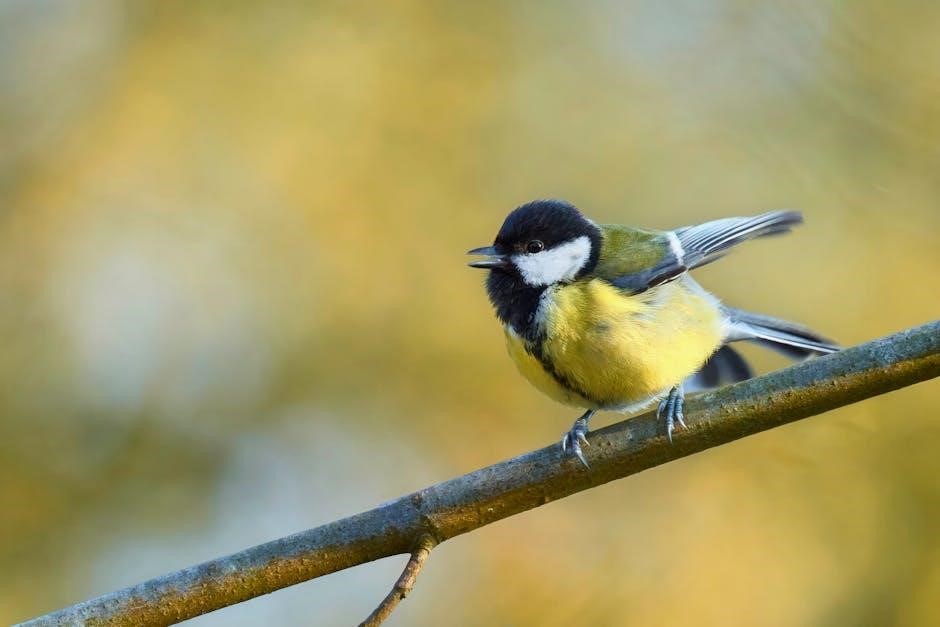
Discover the enchanting world of birdsong right outside your door! This guide helps you identify feathered friends by their unique vocalizations‚ enhancing your backyard experience.
Birdsong offers a constant chorus‚ reminding us of the vibrant wildlife surrounding our homes‚ whether urban or rural‚ throughout the changing seasons.
Understanding Bird Vocalizations
Birdsongs are far more than just pleasant melodies; they are complex communication systems used for attracting mates‚ defending territory‚ and issuing alarms. Recognizing these nuances unlocks a deeper appreciation for the avian world in your backyard.
Different species employ distinct vocalizations‚ ranging from simple chirps to elaborate warbles and trills. The “Drink your teeeee!” call of the Eastern Towhee‚ for example‚ is instantly recognizable. Understanding these patterns requires attentive listening and practice.
The constant chorus of birds changes with the time of year and location‚ reflecting breeding seasons‚ migration patterns‚ and habitat preferences. Learning to decipher these signals transforms your backyard into a vibrant‚ communicative ecosystem‚ revealing the hidden language of birds.
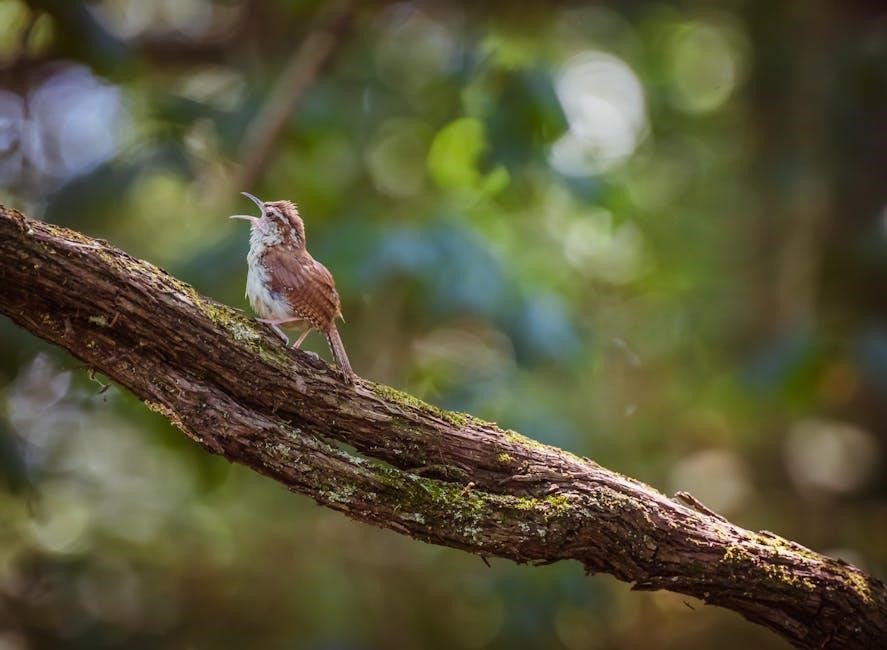
Common North American Birdsongs
Explore the diverse soundscape of North America! We’ll focus on easily identifiable songs from familiar backyard birds‚ starting with the Eastern Towhee and American Robin.
Eastern Towhee: The “Drink Your Tee” Bird
Recognizable by its bold song‚ the Eastern Towhee truly sounds as if it’s calling out “Drink your tee!” This distinctive phrase‚ often delivered from within dense shrubbery‚ makes identification relatively easy‚ even for beginners.
Males are the primary singers‚ using their vocalizations to attract mates and defend their territories. The song isn’t just a single phrase; variations exist‚ but the core “tee” sound remains consistent. Listen closely in the early morning or late afternoon for this cheerful announcement.
These birds prefer thickets and woodland edges‚ so focus your listening efforts in areas with abundant shrubs and undergrowth. Observing the bird itself – a striking black and reddish-brown bird – can further confirm your auditory identification.
American Robin: A Familiar Morning Song
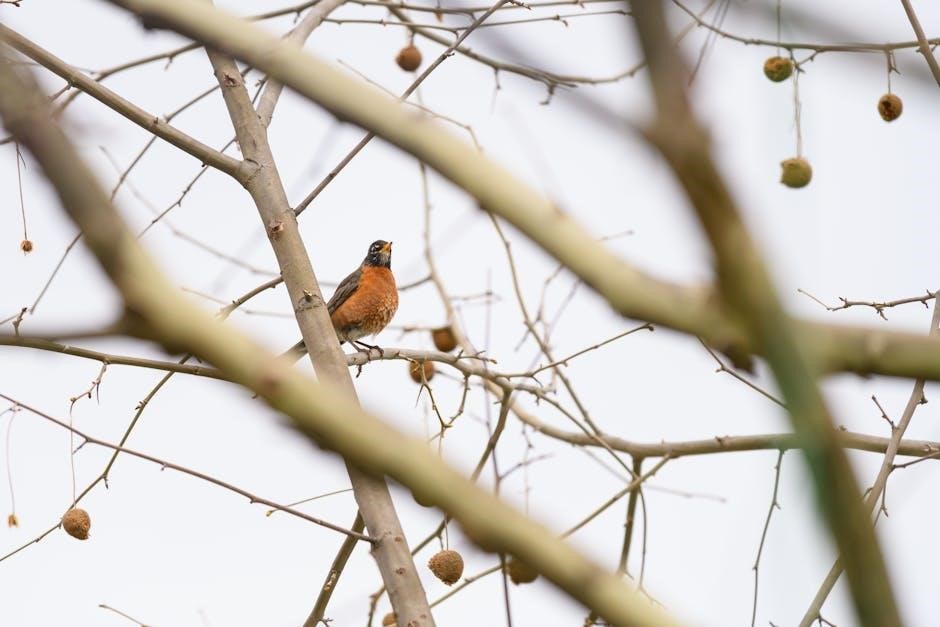
The American Robin’s song is a cornerstone of the spring and summer soundscape‚ a cheerful and recognizable melody often heard at dawn. Described as a series of warbling phrases‚ it’s a complex and varied tune‚ differing slightly between individual birds.
Robins aren’t limited to a single song; they incorporate a range of notes and patterns‚ creating a fluid and musical performance. Listen for a rising and falling quality‚ with clear‚ distinct notes. They often sing from prominent perches‚ like trees or rooftops‚ broadcasting their presence.
This adaptable bird thrives in various habitats‚ including lawns‚ gardens‚ and parks‚ making it a common visitor to backyards across North America. Its song is a welcome sign of warmer weather and renewed life.
Northern Cardinal: Whistled Phrases and Variations
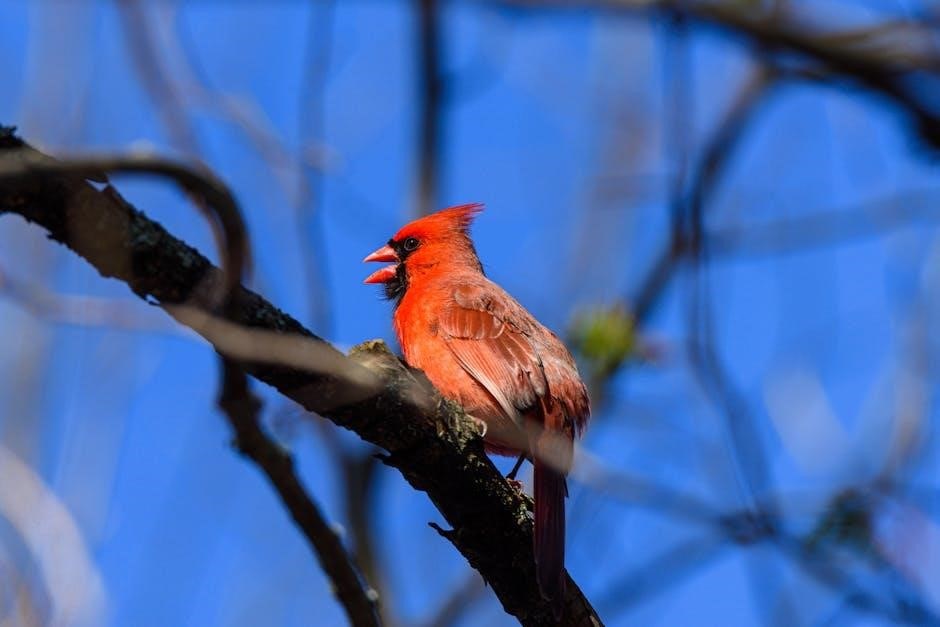
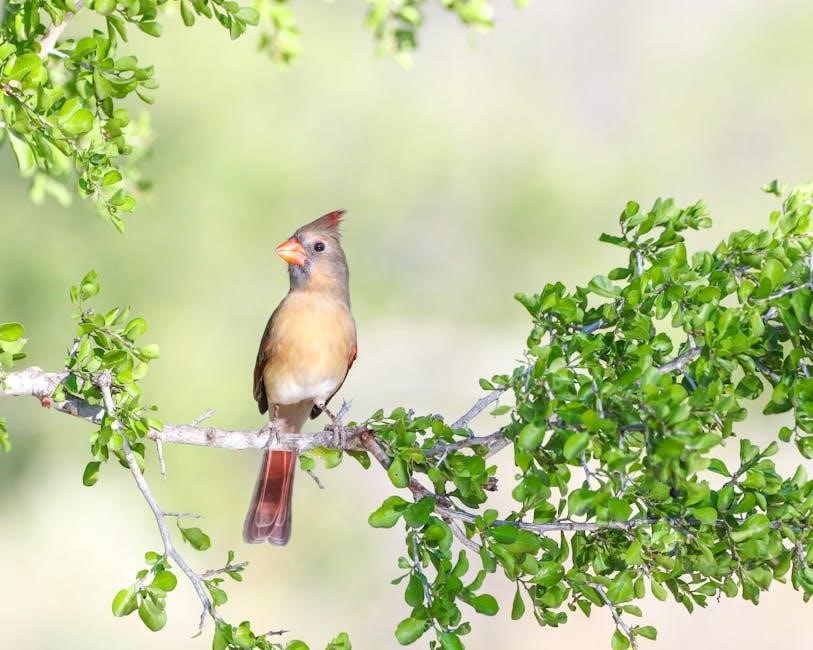
The Northern Cardinal boasts a remarkably diverse repertoire of songs‚ far beyond a simple “cheer‚ cheer‚ cheer.” Males primarily deliver these complex melodies‚ often featuring clear‚ whistled phrases‚ but females also sing‚ though their songs are typically less elaborate.
Cardinal songs aren’t static; they exhibit significant regional variations and individual creativity. Listen for repeated motifs‚ interspersed with trills and buzzy notes. They often incorporate mimicry‚ imitating other bird calls or even mechanical sounds.
These vibrant birds are year-round residents in many areas‚ meaning their songs can be enjoyed throughout the seasons. Their bright plumage and distinctive vocalizations make them a favorite among bird enthusiasts.
House Finch: A Warbling‚ Cheerful Tune
The House Finch delivers a delightful and energetic song‚ often described as a cheerful warble or a series of musical chirps. Males are the primary singers‚ using their vocalizations to attract mates and defend territory. Their song is remarkably consistent‚ yet displays subtle individual variations.
Listen for a rapid succession of notes‚ often rising and falling in pitch‚ creating a bubbly‚ almost cascading effect. They frequently incorporate short‚ buzzy trills within their song. House Finches are adaptable singers‚ modifying their tunes slightly based on their environment.
This common backyard visitor’s song is a welcome sound‚ adding a lively touch to any outdoor space.
Identifying Birdsongs by Habitat
Different environments host unique bird communities‚ influencing the songs you’ll hear! Woodland‚ field‚ and urban habitats each present distinct avian vocal repertoires.
Woodland Birdsongs
Deep within forested areas‚ a complex tapestry of birdsong unfolds. Expect to encounter the melodic tunes of wood thrushes‚ known for their ethereal‚ flute-like calls that echo through the trees. The varied thrush contributes a haunting‚ descending whistle‚ while the ovenbird offers a steadily increasing “teacher-teacher-teacher” phrase.
Listen for the sharp “chip” of the scarlet tanager‚ often hidden amongst the leaves‚ and the drumming of woodpeckers announcing their territory. Warblers‚ a diverse group‚ fill the woods with their bright‚ buzzing trills and complex songs. Identifying woodland birdsong requires patience and a keen ear to distinguish subtle variations within the dense foliage‚ creating a truly immersive natural experience.
Field and Meadow Birdsongs
Open fields and meadows present a different acoustic landscape‚ dominated by the songs of grassland birds. The Eastern meadowlark delivers a cheerful‚ whistling song‚ often heard from a prominent perch. Red-winged blackbirds proclaim their territories with a distinctive “conk-la-ree!” call‚ frequently near marshy areas.
Grasshoppers sparrows offer a simple‚ buzzy song‚ blending with the rustling grasses. Bobolinks create a complex‚ bubbling melody during their breeding season. Field birdsong often carries further in the open air‚ making identification easier‚ though distinguishing similar species requires careful attention to subtle differences in pitch and rhythm. These vibrant sounds signal a thriving ecosystem.
Urban and Suburban Birdsongs
City and suburban soundscapes are surprisingly rich with birdsong‚ though often masked by human noise. The House Finch‚ with its warbling‚ cheerful tune‚ is a common resident in these areas‚ adapting well to human presence. European Starlings are highly vocal mimics‚ incorporating sounds from their environment into complex songs.
American Robins frequently sing their familiar morning song from rooftops and trees. Mourning Doves offer a soothing‚ cooing call. Identifying birds in urban settings requires filtering out background noise and focusing on consistent song patterns. Despite the challenges‚ a diverse range of species can thrive in modified habitats‚ bringing nature closer to home.
Tools for Birdsong Identification
Enhance your birding skills with helpful resources! Apps‚ online databases‚ binoculars‚ and field guides are essential tools for accurately identifying birds by their songs.
Birdsong Identification Apps
Modern technology offers incredible assistance in identifying birdsong. Numerous smartphone applications utilize sophisticated sound recognition algorithms to analyze bird vocalizations in real-time. These apps often feature extensive libraries of bird songs‚ allowing users to compare recordings with known species.
Many apps also provide visual aids‚ such as range maps and bird images‚ to further aid in identification. Some popular options include Merlin Bird ID by Cornell Lab of Ornithology‚ which is renowned for its accuracy and user-friendly interface‚ and Song Sleuth. These tools are particularly helpful for beginners‚ offering a convenient and accessible way to learn and practice birdsong recognition while exploring your backyard or local parks.
Remember to use these apps as a learning aid‚ and always verify identifications with other resources.
Online Birdsong Databases
Complementing apps‚ a wealth of online resources provide comprehensive birdsong recordings and information. Websites like the Cornell Lab of Ornithology’s All About Birds and the Xeno-canto collaborative archive offer extensive collections of bird vocalizations from around the world. These databases allow users to search by species‚ location‚ or even specific song characteristics.
The Smithsonian Institution Libraries also provides access to valuable audio resources‚ including historical recordings of bird songs. These online platforms often include spectrograms – visual representations of sound – which can aid in identifying subtle differences in bird vocalizations. Utilizing these databases alongside field observation enhances learning and provides a deeper understanding of avian communication.
Exploring these resources expands your knowledge beyond app-based identification.
Using Binoculars and Field Guides
While birdsong identification is key‚ visual confirmation greatly enhances the learning process. A good pair of binoculars brings distant birds into focus‚ allowing for detailed observation of plumage and behavior. Pairing binoculars with a comprehensive field guide is invaluable.
Field guides provide illustrations or photographs of birds‚ alongside descriptions of their appearance‚ habitat‚ and – crucially – their songs. Learning to associate a specific song with a bird’s visual characteristics solidifies identification skills. Focus on noting key features like size‚ shape‚ and color patterns.
Combining auditory and visual cues creates a more complete understanding of your backyard birds‚ fostering a deeper connection with nature.
Learning Birdsongs: Tips and Techniques
Begin by mastering songs of common birds‚ focusing on distinctive phrases. Record sounds for comparison‚ and consistent practice will unlock the secrets of birdsong!
Start with Common Birds
Embarking on the journey of birdsong identification can feel daunting‚ but a strategic approach makes it enjoyable and achievable. Begin with the birds you encounter most frequently in your backyard or local parks. Familiarizing yourself with their songs provides a solid foundation for recognizing more complex melodies later on.
For many‚ the American Robin’s cheerful song is a quintessential sound of spring mornings. The Eastern Towhee‚ with its distinctive “Drink your tee!” call‚ is another excellent starting point. Similarly‚ the Northern Cardinal’s varied whistles and the House Finch’s warbling tune are relatively easy to learn.
Focusing on these common species allows you to build confidence and develop your ear for subtle differences in pitch‚ rhythm‚ and phrasing. Once you’ve mastered a few common songs‚ you’ll find it easier to tackle the more challenging identifications;
Focus on Distinctive Phrases
Instead of trying to memorize entire birdsongs at once‚ concentrate on identifying key phrases or motifs. Many birds repeat specific sequences of notes‚ making them easier to recognize. Think of these phrases as the bird’s signature tune – a unique element that sets it apart from others.
The Eastern Towhee’s “Drink your tee!” is a prime example of a distinctive phrase. Similarly‚ the Northern Cardinal often incorporates clear‚ whistled phrases into its varied song. Paying attention to these memorable snippets simplifies the identification process.
Consider the rhythm and quality of the sound. Is it a sharp chirp‚ a mellow warble‚ or a trilling whistle? These characteristics‚ combined with distinctive phrases‚ will significantly improve your ability to pinpoint the bird responsible for the beautiful music.
Record and Compare Birdsongs
Utilizing a recording device – even a smartphone – can be incredibly helpful in learning birdsong. Capture the sounds you hear in your backyard‚ focusing on songs you’re unsure about. This creates a personal library for later analysis and comparison.
Once recorded‚ compare your backyard birdsongs to those available on online databases or within birdsong identification apps. Listening side-by-side allows you to discern subtle differences and similarities‚ solidifying your understanding.
Don’t be afraid to revisit recordings multiple times. New details often emerge with repeated listening. This practice‚ combined with field guides‚ will accelerate your ability to confidently identify the avian chorus surrounding you‚ transforming your backyard into a vibrant soundscape.
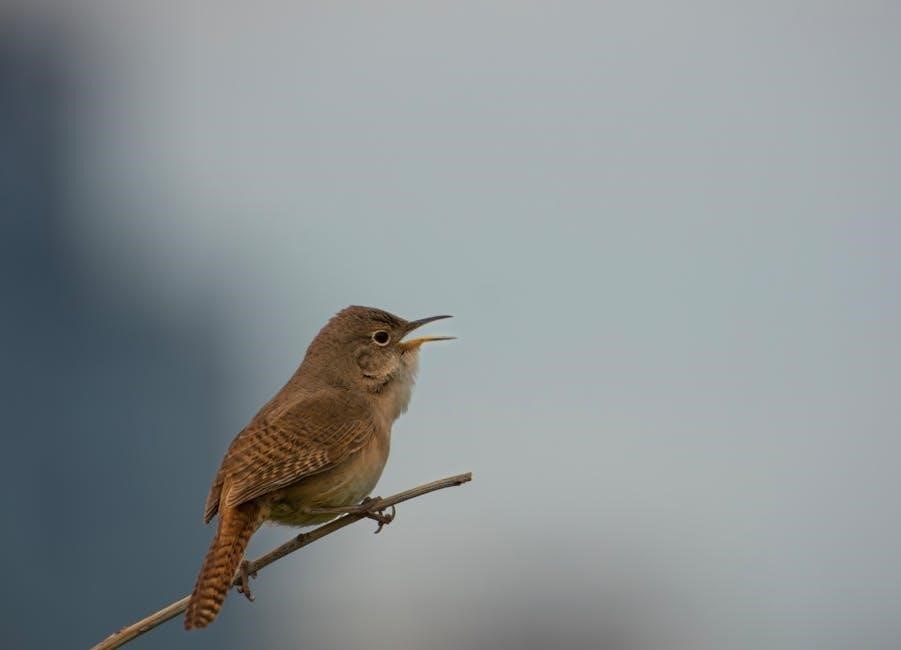
Attracting Birds to Your Backyard
Enhance your birdsong experience by creating a welcoming habitat! Provide food‚ water‚ and shelter‚ while avoiding harmful pesticides for a thriving avian community.
Providing Food and Water
Attracting birds with food is a rewarding experience‚ but selecting the right options is crucial. Black oil sunflower seeds are a favorite for many species‚ offering high energy content. Nyjer seeds appeal to finches‚ while suet provides essential fats‚ especially during colder months.
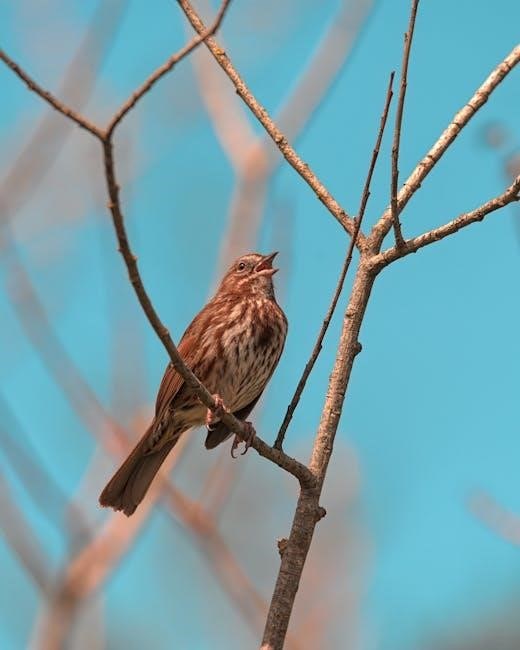
Offer a variety of feeders – tube‚ hopper‚ and platform – to cater to different feeding preferences. Regularly clean feeders to prevent the spread of disease. Fresh water is equally vital; a birdbath‚ kept clean and filled‚ provides a crucial resource for drinking and bathing.
Consider a heated birdbath during freezing temperatures to ensure a consistent water source. Strategically placing food and water near shrubs offers birds cover from predators‚ creating a safe and inviting environment.
Creating Shelter and Nesting Sites
Beyond food and water‚ birds require safe shelter from predators and harsh weather. Planting native trees and shrubs provides natural cover and nesting materials. Dense evergreens offer year-round protection‚ while deciduous trees provide nesting cavities as they mature.
Consider installing birdhouses designed for specific species‚ ensuring proper size and placement. Leave dead trees or branches standing‚ if safe‚ as they often provide valuable nesting and foraging opportunities. Brush piles also offer excellent shelter.
Avoid pruning shrubs during nesting season. Providing a variety of plant heights and densities creates a diverse habitat‚ attracting a wider range of bird species to your backyard sanctuary.
Avoiding Pesticides and Herbicides
Protecting birds means creating a safe environment‚ free from harmful chemicals. Pesticides and herbicides can directly poison birds or eliminate their food sources – insects and seeds.
Opt for natural pest control methods‚ such as encouraging beneficial insects like ladybugs and lacewings. Hand-weeding gardens and using organic gardening practices are excellent alternatives to chemical herbicides.
Even seemingly harmless products can be detrimental; always read labels carefully. A chemical-free yard supports a healthy ecosystem‚ ensuring a thriving bird population and a vibrant chorus of birdsong in your backyard. Prioritize bird wellbeing by choosing eco-friendly gardening solutions.